Tool Library Cooperative Structures
What Is a Tool Library Cooperative?
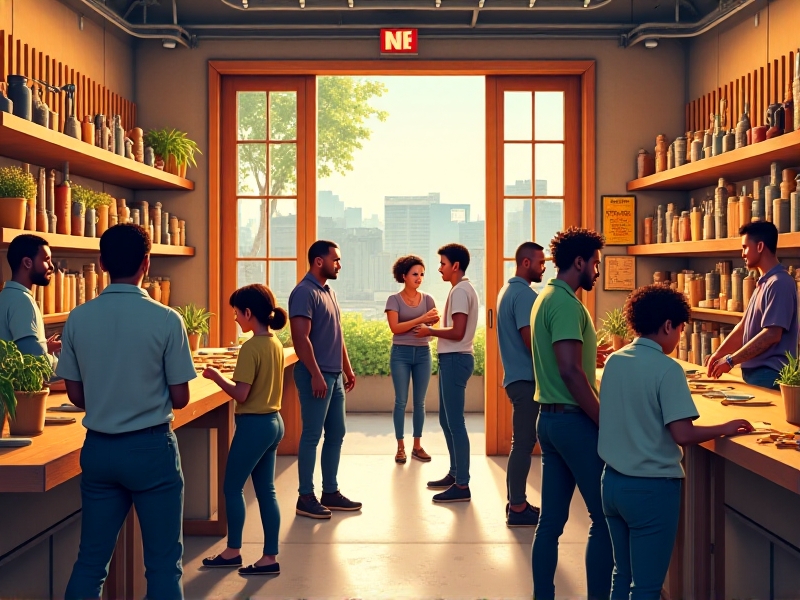
Imagine a space where drills, saws, ladders, and lawnmowers are as accessible as books at your local library. A tool library cooperative is a member-driven organization that allows individuals to borrow tools for short-term use, eliminating the need for personal ownership. Rooted in cooperative principles, these libraries prioritize collective resource-sharing over consumerism. Members pool resources, contributing fees or volunteer hours to maintain inventory and ensure equitable access. Beyond cost savings, tool libraries reduce waste by curbing redundant purchases and extending the lifespan of tools through shared use.
These cooperatives often operate in physical spaces similar to traditional libraries, with catalog systems to track loans. The concept aligns with circular economy principles, where resources circulate within communities rather than ending up in landfills. By democratizing access to equipment, tool libraries empower individuals to tackle home repairs, craft projects, or urban gardening without financial barriers. They also serve as hubs for skill-sharing, hosting workshops on DIY projects or tool maintenance. Unlike commercial rental services, cooperatives focus on community-building, fostering trust and collaboration among members.
The History and Evolution of Tool Libraries

The first tool libraries emerged in the 1970s during the environmental movement’s rise. Cities like Berkeley, California, pioneered the model as part of a broader push toward sustainable living. Early iterations were grassroots efforts, often run by volunteers from donated garages or basements. These libraries resonated with countercultural ideals, emphasizing communal ownership and resistance to hyper-consumerism.
In the 2010s, the sharing economy reignited interest in tool libraries, with digital platforms streamlining membership and inventory management. Organizations like the Toronto Tool Library (2013) scaled the concept, offering thousands of tools alongside workshops. Today, tool libraries exist in over 50 cities worldwide, from Edinburgh to Seoul, adapting to urban and rural needs. Modern libraries often integrate with maker spaces, broadening access to 3D printers and laser cutters.
How Tool Library Cooperatives Operate

Membership models vary: some charge sliding-scale fees ($50–$150 annually), while others adopt time-banking systems where volunteer hours equate to borrowing credits. Tools are acquired through donations, grants, or partnerships with hardware companies. Inventory management software tracks availability, reservations, and maintenance schedules.
Governance is democratic, with members voting on policies and budgets. Many cooperatives form boards to handle operations, while others use consensus-based decision-making. Maintenance relies on member expertise—carpenters might repair saws, while engineers service power tools. Tool libraries often host repair workshops to teach members how to fix broken items, fostering self-sufficiency.
Benefits of Joining or Starting a Tool Library

Members save hundreds annually by avoiding tool purchases. For instance, a pressure washer used once a year costs $15 to borrow versus $300 to buy. Renters and apartment dwellers benefit from clutter-free living, while communities gain access to high-quality tools otherwise unaffordable. Environmentally, shared use reduces manufacturing demand and landfill waste—studies show 40% of household tools gather dust.
Tool libraries also strengthen social ties. Members exchange skills during workshops, and partnerships with schools or nonprofits amplify impact. For example, the West Philly Tool Library collaborates with urban farms, providing equipment to grow fresh produce in food deserts.
Community Impact and Sustainability
Tool libraries empower marginalized groups by lowering barriers to homeownership and entrepreneurship. In Detroit, cooperatives equip residents to renovate abandoned houses, combating blight. During disasters, libraries become critical resource hubs—the Portland Tool Library lent equipment for flood cleanup in 2021.
Ecologically, tool sharing cuts carbon emissions linked to manufacturing and disposal. If every U.S. household borrowed one tool annually instead of buying new, it could eliminate 2 million tons of CO2 emissions. Libraries also promote repair culture; Edinburgh Tool Library’s “Fixperts” program teaches mending clothes and electronics, challenging throwaway mindsets.
Challenges and Solutions in Cooperative Tool Sharing
Funding instability plagues many cooperatives. Grants and donations fluctuate, while membership fees rarely cover costs. The Berkeley Tool Library nearly closed in 2019 before crowdfunding $30k. Others partner with municipalities for space subsidies. Volunteer burnout is another issue; structured roles and paid coordinators improve retention.
Theft or damage, though rare, requires clear accountability systems. Some libraries implement security deposits or member vouch systems. Digital tools help: Lafayette Tool Library’s RFID tracking reduced losses by 60%.
Case Studies: Successful Tool Libraries Around the World
Toronto Tool Library (TTL), Canada’s largest, lends over 5,000 items across four branches. TTL’s “Library of Things” includes camping gear and musical instruments, broadening accessibility. Its partnership with the city provides free memberships to low-income residents.
Edinburgh Tool Library combines tool lending with creative studios, hosting artist residencies. Members built installations for the Edinburgh Festival using shared equipment. In Kenya, the Nairobi Fixing and Innovation Community (NAFIC) offers tools and training for repairing electronics, supporting circular economies in informal settlements.
Future Trends in Tool Library Cooperatives
Technology will drive accessibility. Apps like “ToolMaven” enable cross-library reservations, while blockchain could track tool lifespans. Libraries may integrate AI for predictive inventory—suggesting seasonal tools like snowblowers before winter storms.
As climate urgency grows, municipalities may subsidize tool libraries as infrastructure. Barcelona’s “Biblioteca de Coses” (Library of Things) model, backed by city funding, could inspire global replication. Hybrid models merging tool libraries with coworking spaces or childcare hubs could further embed cooperatives into daily life, redefining community resource governance.