Pest-Confusing Polyculture Formulas
Understanding Pest-Confusing Polyculture: A New Paradigm in Agriculture
Monoculture farming, with its neat rows of identical crops, has dominated agriculture for decades. Yet, its simplicity comes at a cost: vulnerability to pests, soil degradation, and reliance on chemical interventions. Enter pest-confusing polyculture—a dynamic approach that mimics natural ecosystems by interplanting diverse species to disrupt pest behavior. This method leverages plant diversity to create ecological "noise," making it harder for pests to locate their preferred hosts. The result? Reduced pest damage, healthier soils, and resilient ecosystems. This article explores the science, design, and practical applications of this innovative strategy.

The Science Behind Pest Confusion in Polycultures
Pests like aphids and beetles rely on visual and olfactory cues to find host plants. Monocultures act as a homogenous beacon, allowing pests to thrive. In polycultures, however, diverse plants emit a cacophony of scents and create visual camouflage. For example, aromatic herbs like basil or rosemary mask the smell of target crops, while tall sunflowers or corn disrupt flight patterns. Studies show that certain plant combinations reduce pest populations by up to 60% without pesticides. Researchers attribute this to "associative resistance," where pest movement and reproduction are stifled by environmental complexity.
Designing Effective Polyculture Formulas
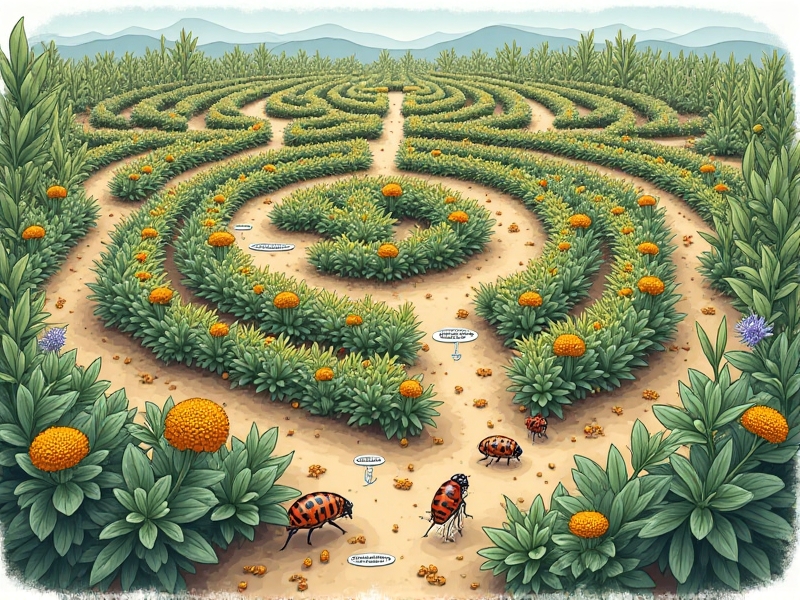
Crafting a pest-confusing polyculture requires strategic planning. Start by selecting a primary crop and pairing it with companion plants that repel or distract pests. For instance, planting nasturtiums near squash deters squash bugs, while clover between brassicas attracts predatory beetles. Spatial diversity matters: alternate tall, medium, and ground-level plants to disrupt pest pathways. Temporal diversity—staggering planting times—also plays a role. A well-designed formula might include trap crops (e.g., radishes for flea beetles), nutrient accumulators (comfrey for potassium), and pollinator attractors (borage or calendula).

Case Studies: Success Stories From the Field
In Vermont, a small-scale farm combined tomatoes, basil, and marigolds to reduce hornworm infestations by 70%. The marigolds’ roots released alpha-terthienyl, a compound toxic to nematodes, while basil’s scent masked the tomatoes. In Kenya, farmers intercropped maize with desmodium and napier grass, which repel stem borers and attract parasitic wasps. Yields increased by 30%, and pesticide use plummeted. Even urban gardens benefit: rooftop plots in Berlin using polycultures reported fewer aphids and higher biodiversity compared to monoculture setups.

Overcoming Challenges in Polyculture Implementation
Polyculture isn’t without hurdles. Farmers must balance competition for light, water, and nutrients. For example, aggressive growers like mint can overshadow delicate herbs. Solution? Use physical barriers or strategic spacing. Harvesting can also be labor-intensive—planting in distinct zones or using perennial ground covers mitigates this. Knowledge gaps pose another challenge, but resources like companion planting guides and community workshops are bridging the gap. Technology helps, too: apps like Plantwise offer real-time polyculture design tips based on local conditions.
The Future of Pest-Confusing Polycultures
As climate change intensifies pest pressures, polyculture offers a sustainable path forward. Emerging technologies like AI-driven planting algorithms and drone-monitored diversity indices could refine polyculture designs. Meanwhile, seed companies are developing pre-mixed polyculture seed packs tailored to regional pests. On the policy front, subsidies for diversified farming could accelerate adoption. By embracing nature’s chaos, farmers are rediscovering a timeless truth: diversity is the ultimate defense.